Offshore classification
Bureau Veritas provides classification services for offshore assets to meet shifting industry needs.
INCREASED DEMAND FOR FLOATING ASSETS
As demand for lower carbon energy rises, LNG (Liquefied Natural Gas) production is growing rapidly. Today, three types of floating LNG assets make up an increasing share of all offshore assets: Floating Storage and Regasification Units (FSRUs), Floating Storage Units (FSUs) and Floating Liquefied Natural Gas facilities (FLNGs). Global FLNG capacity alone is expected to double by 2030.
FLNGs, along with FSRUs and FSUs, are becoming increasingly popular as they allow for a more diversified energy supply, offering important protection from supply chain risks and constrained gas availability. FLNGs enable LNG production in remote small fields and can be redeployed to new fields as needed. FSRUs regasify LNG, making it possible to import LNG from suppliers around the world. FSUs support LNG imports by providing extra storage capacity.
CHALLENGES FACING THE OFFSHORE INDUSTRY
The impact of geopolitical tensions on gas supply has brought energy security and energy chain resilience to the forefront of the energy industry. Owners and operators of offshore assets face other important challenges, like achieving decarbonization, ensuring cybersecurity and meeting regulatory requirements like FuelEU Maritime, the EU Emissions Trading System (ETS) and methane emissions tracking. Thanks to its cross-sector expertise, Bureau Veritas is well-equipped to help offshore customers overcome these challenges by classifying assets such as FLNGs, FSRUs and FSUs.
Bureau Veritas is the only class society active across the entire gas value chain from onshore to offshore production and transportation.
MEETING INDUSTRY NEEDS WITH OFFSHORE CLASSIFICATION
As the industry shifts toward floating assets and the expansion of LNG, asset owners need to assure a variety of stakeholders that their floating units operate safely and comply with regulations in force. But offshore assets are more technically complex than marine assets and are subject to increased regulatory requirements, making the certification process more challenging.
Backed by extensive experience in all types of marine and offshore assets, we offer classification expertise in both fixed and floating offshore assets. We class tankers converted to floating offshore units and perform class transfers on behalf of clients, handling all steps in the process. We also help track and monitor methane emissions.
Our expertise in offshore assets and our global network of qualified gas surveyors help us provide clients with peace of mind throughout the offshore classification process. We verify the safety of structures and marine systems by assessing equipment design and functions as well as structural strength and integrity. Once your unit is classed, we provide written assurance declaring the facility compliant with classification standards.
OUR OFFSHORE CLASSIFICATION SERVICES
We offer dedicated Rules for both floating and fixed assets, ensuring safe and compliant offshore assets for owners and operators.
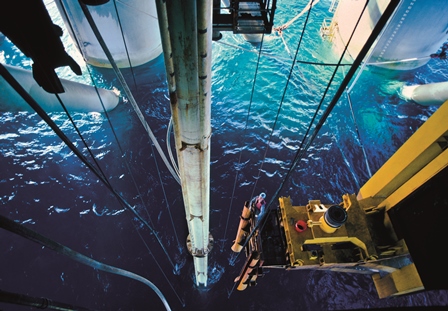
DEDICATED RULES FOR OFFSHORE ASSETSThrough services like classification, we support operators with an appropriate compliance framework adapted to each unit type (such as oil and gas offshore production and storage units, drilling units and other service vessels). We also support floating offshore wind assets with dedicated Rules for floating offshore wind turbines. Our Rules and guidance notes are continuously updated, and we develop new Rules to answer industry needs. |
 |
DEDICATED RULES FOR FSRUSIn response to growing LNG demand, Bureau Veritas released the NR 645 Rules for the classification of Floating Storage and Regasification Units (FSRUs). These Rules set out technical and operational requirements to which Bureau Veritas applies a unified approach, providing clarity for safety and design challenges. | 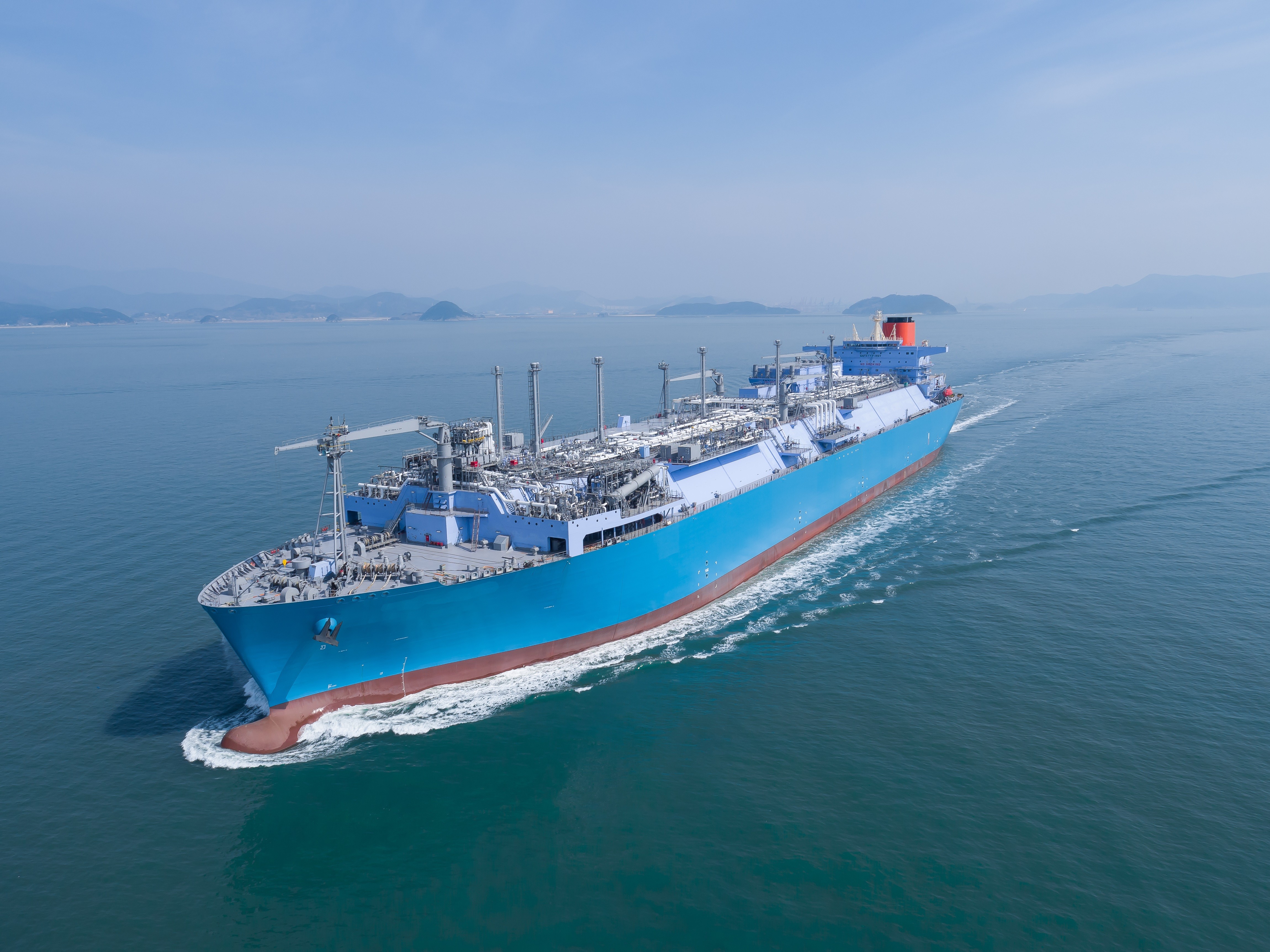 |
RULES FOR DIVING SYSTEMSOur offshore classification services extend beyond LNG to include all offshore assets. Our NR 610 Rule covers the classification of diving systems, offering class symbol, construction mark, and service notations. The Rule defines requirements for structures ranging from surface-supplied systems for shallow-water diving to complex saturation systems for deep-sea diving. | 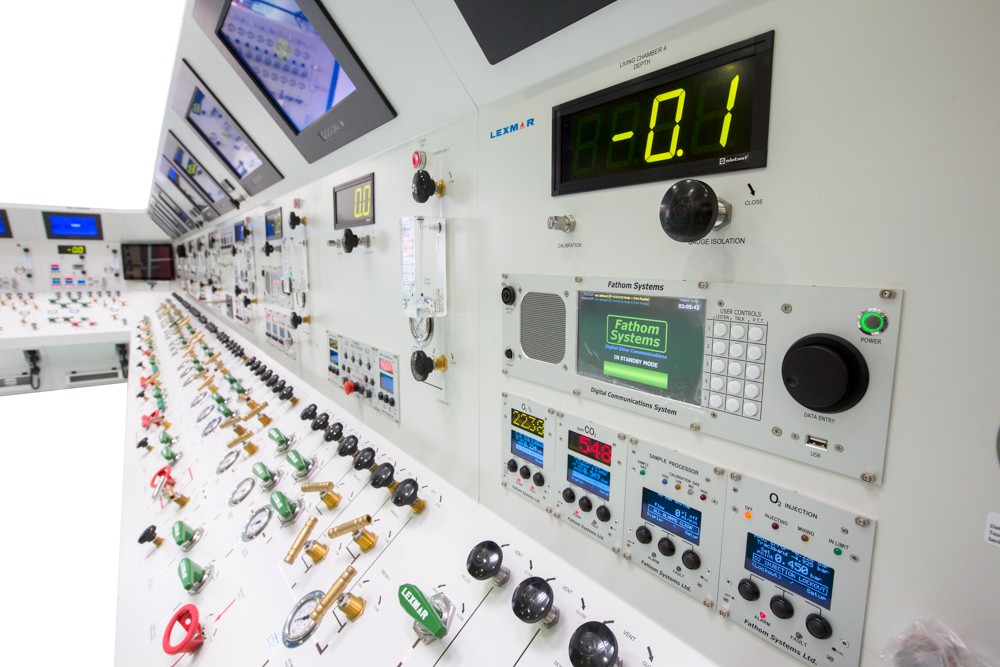 |
DIGITAL CLASSIFICATION SERVICES
We provide digital solutions to classify offshore assets including drilling units, Floating Production Storage and Offloading (FPSOs), FLNGs and FSRUs.
DIGITAL SOLUTIONS FOR OFFSHORE CLASSIFICATION
FINITE ELEMENT MODELING (FEM) SOFTWARE
VeriSTAR Hull is our FEM software for building and managing safe and optimal designs. This in-house solution ensures safe performance throughout an asset’s lifecycle by performing strength, stress and fatigue assessments. It combines the Finite Element Modeling and Postprocessing (FEMAP) tool with NX and MSC Nastran (NASA Structural Analysis) finite element solvers and custom Bureau Veritas-designed features, enabling fast and efficient modeling and Rule compliance checks.
Homer is our software for direct hydro-structure calculations. This software enables users to target improved structural integrity by assessing the structural responses of floating units against different wave conditions. Homer is based on an advanced coupling method that interfaces with Hydrostar, our hydrodynamic solver. This software can analyze any type of floating structure including ship-shaped structures (like FPSOs) and round-shaped offshore platforms.
DIGITAL CLASSIFICATIONS
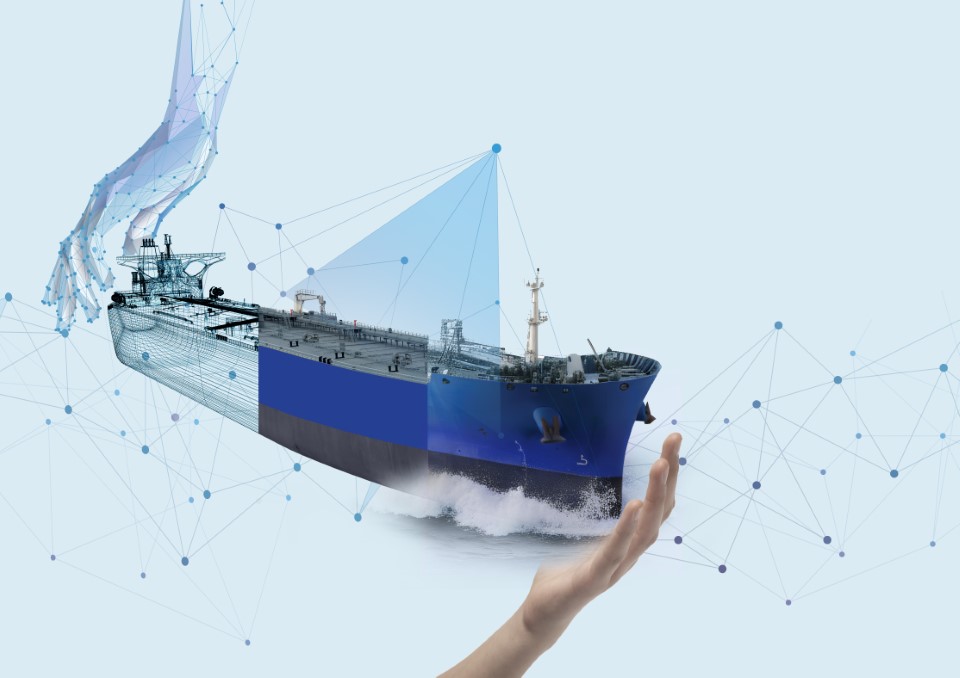 AUGMENTED SURVEYOR SOFTWAREAugmented Surveyor 3D (AGS 3D) is our advanced AI-powered asset integrity management system for offshore units and ships. It combines drone-powered LiDAR surveys, AI corrosion detection and automated 3D modeling. This technology-led approach enables a more precise view of your asset’s structure, even in hard-to-reach and hazardous areas. These new capabilities reduce costs, increase safety and make inspection and maintenance easier. |  3D ClassificationOur 3D classification platform enables clients to use one 3D model throughout design, construction and classification. Thanks to this digital platform, stakeholders around the world can collaborate on the same 3D model in real time. This approach saves time and costs on classification, while improving quality. |
NETWORK OF HIGHLY QUALIFIED SURVEYORS
Bureau Veritas’ worldwide network operates across 140 countries, ensuring we always have an expert located near your asset. Our network of highly qualified surveyors is based in major shipbuilding locations, ports and offshore oil and gas hubs. They specialize in the assessment of safety measures and environmental protection standards. | 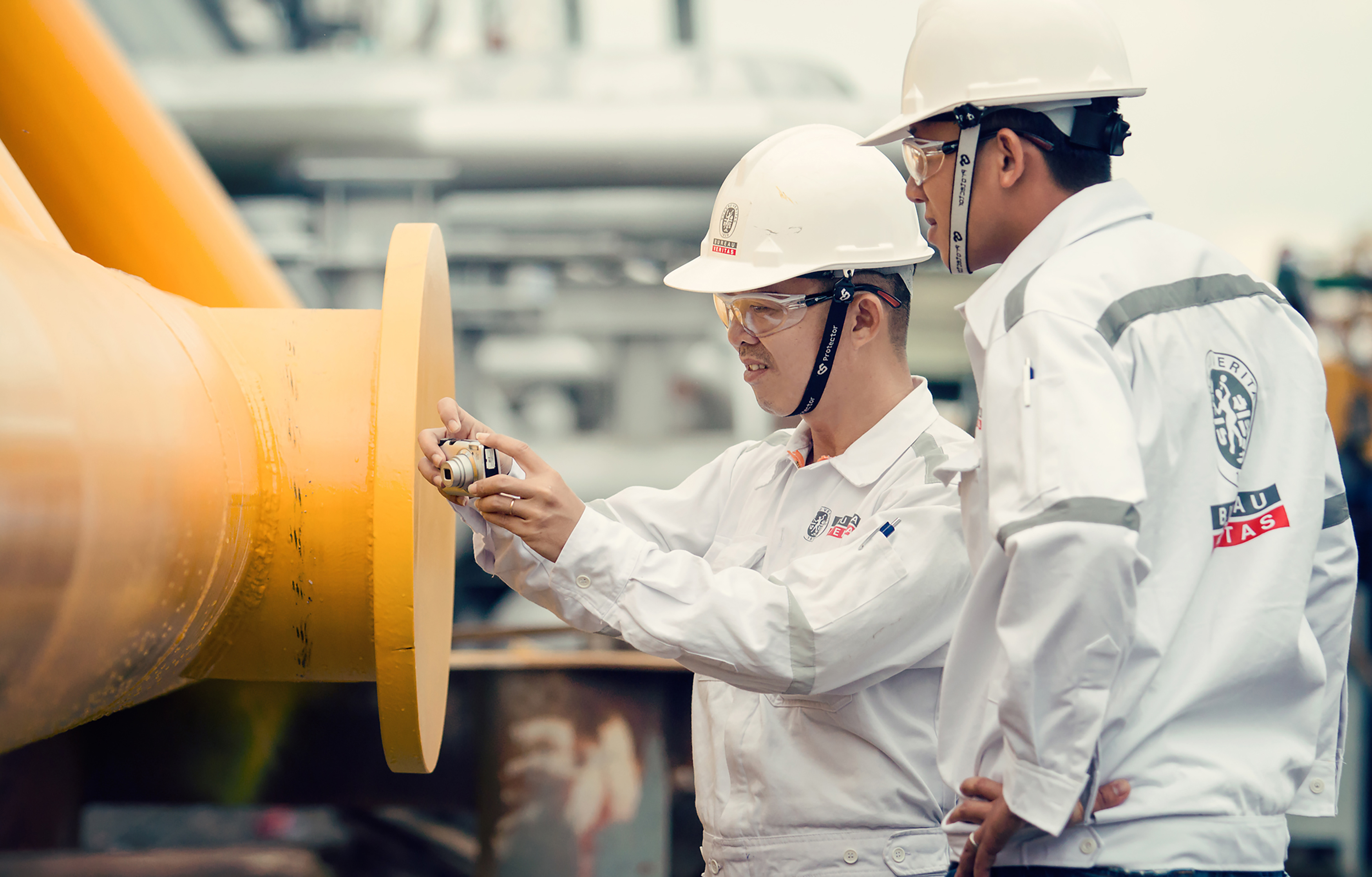 |
BV CLASSIFICATION SERVICES IN ACTION
THE TANGO-EXCALIBUR
We classed this conversion project combining the Excalibur LNG carrier, now converted into a Floating Storage Unit (FSU), with the Tango FLNG. The FLNG and FSU share the same mooring, which is the first time this configuration has been used in a floating LNG terminal. The Tango-Excalibur now combines the Tango FLNG’s liquefaction capacity of over 0.6 million tonnes per annum (MTPA) with the Excalibur’s storage capacity of 138,000m3. It was the fastest FLNG deployment ever – completed in only 18 months – and the unit is currently in operation off the coast of the Republic of Congo.
WISON GENTING FLNG
We classed the WISON Genting FLNG, which will be the first FLNG deployed in Indonesian waters once completed. The FLNG completed hull construction in December 2025, and has since moved into the topsides module integration and system installation phase. After that, it will complete the yard performance test before being towed out and deployed to West Papua, Indonesia. Once deployed ,the WISON Genting FLNG will offer a liquefaction capacity of 1.2 MTPA.
CONTACT A BV OFFSHORE EXPERT
Photo credits ©Shell, Mitsui O.S.K. Lines, LEXMAR


