Maritime digitalization
The future of shipping is digital
A new era of digital shipping is here. Artificial intelligence and enhanced ship connectivity are converging to create new opportunities, and the industry is gradually moving toward autonomous vessels. At the same time, high-quality data is becoming increasingly critical to achieving superior operational performance and accurate emissions reporting. The road to greater efficiency runs through digitalization. With new digital solutions, connected systems and smart technologies, shipowners and operators can rapidly achieve compliance, optimize operations, reduce costs and improve efficiency.
As a leading classification society, Bureau Veritas supports shipowners, shipyards, designers and equipment manufacturers in ensuring compliance, safety and performance thanks to our best-in-class digital solutions. We work proactively and collaboratively with clients to facilitate and secure their digital transformations. We also provide efficient and innovative solutions to simplify their path toward class and statutory compliance.
As maritime digitalization advances, Bureau Veritas has its sights set on the future. We are committed to supporting clients with innovative tools, services and notations to continuously move toward a smarter, safer shipping industry.

Digital Solutions and Transformation Vice-President
Bureau Veritas Marine & Offshore
Digitalization is truly the foundation of the modern shipping industry. From smart and autonomous vessels to 3D classification and remote inspection techniques, to new cybersecurity measures—every major development in shipping rests on a bedrock of digitalization. By combining data and digital tools with longstanding expertise, shipowners and managers can completely reimagine their everyday tasks, operating more safely, cost-effectively and sustainably.
 Smart shipping services Learn More | Ships today are more connected and digitally equipped than ever before, laying the groundwork for smart, autonomous vessels. Smart shipping enables operators to transform data collected from assets into actionable insights, improving safety, efficiency and environmental performance.
To make the most of smart shipping, industry players need to combine smart technologies and cybersecurity measures with human expertise. This requires strong collaboration across the entire shipping ecosystem, including charterers, shipyards, technology providers and classification societies.
Bureau Veritas supports clients in safely developing and operating smart and autonomous vessels throughout their lifecycle. Our SMART notations cover requirements for vessels at all levels of connectivity: computer-based, connected, augmented and autonomous. Our Rules for ships equipped with smart systems (NR675) and guidance for autonomous ships (NI641) confirm that a ship’s digital systems are enhancing operational efficiency, safety, and maintenance. We also offer SmartShip Software Type Approval Certification (TAC) and Smart Service Supplier recognition for qualified partners and technologies.
By working with Bureau Veritas, shipowners and operators can take a pragmatic approach to digital transformation and smart shipping. Our collaboratively developed SMART and CYBER notations address complementary aspects of the same challenge: ensuring the functional reliability and security of connected ships and systems, while helping shipowners boost efficiency and performance. |
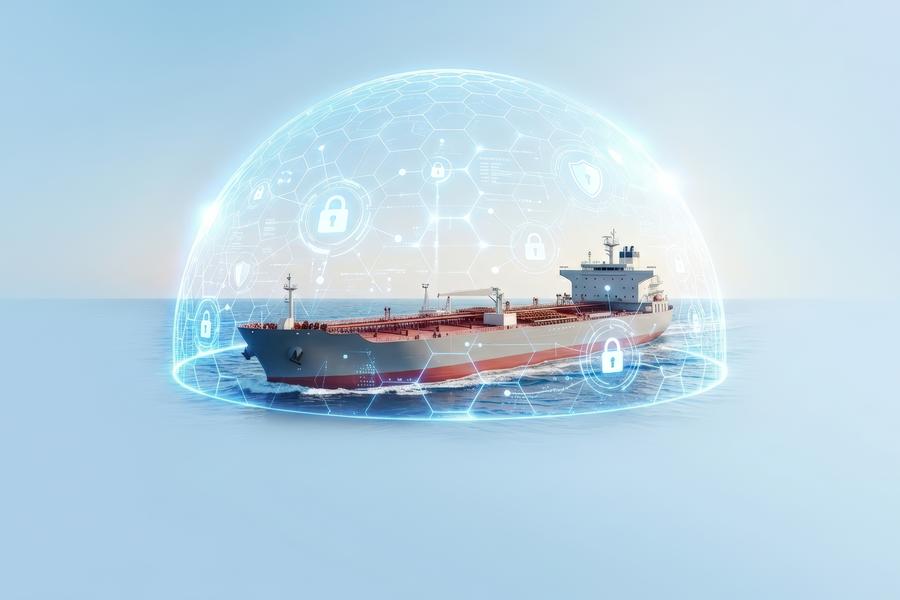
Ship cybersecurity
For shipowners and operators, increased digitalization can deliver key benefits, enabling greater efficiency, faster collaboration and smarter decision-making. Connected systems and remote monitoring and management solutions have become increasingly common on board, improving ship design and operations, and facilitating classification.
However, with new technologies and greater connectivity comes the increased risk of digital threats, such as cyberattacks. Remote management and monitoring systems are particularly vulnerable to malicious interference, as they expand the available surface of attack. Maritime assets are also at greater risk of cyber threats due to their longevity: marine equipment may operate for decades, while undergoing few cybersecurity updates. This leaves older assets open to cyberattacks, potentially compromising cargo, operations and even personnel safety.
To promote cybersecurity and improve onboard safety, Bureau Veritas collaborates with maritime stakeholders to develop relevant Rules and notations. Our comprehensive cybersecurity framework covers both organizational and technical measures for shipowners, shipyards and equipment manufacturers. This enables maritime stakeholders to protect their assets and personnel, while complying with International Maritime Organization (IMO) and International Association of Classification Societies (IACS) requirements for cybersecurity.
Our digital solutions
The maritime world is embracing digitalization, deploying new technologies to optimize fleet management and performance. Bureau Veritas’ digital tools enable ship and asset owners to achieve compliance efficiently, reducing costs and improving sustainability.
-
Digital collaboration
From shipowners to shipyards, designers to equipment manufacturers, many stakeholders need access to class and statutory information. They need efficient collaboration with their classification society to organize surveys and inspections, have designs reviewed or verify fuel consumption. Bureau Veritas’ user-friendly online and mobile applications help our clients and partners access key data and documentation at every stage of an asset’s lifecycle, from design and construction through operations and decommissioning. This helps shipowners maintain compliance, limit costs, save time and boost performance.
-
Digital innovation
Bureau Veritas applies state-of-the-art technologies, including artificial intelligence (AI), 3D modeling, digital twins, robotics, and more to ship classification, from design to operations. This enables our clients to save time, increase safety, and optimize monitoring and maintenance throughout the asset lifecycle.
-
Energy transition
OptiCARBONTM helps shipowners define energy transition strategies to optimize energy consumption on board and improve fleet performance.
Strengthened by our partnership with OrbitMI, we offer ship reporting and real-time emissions and performance monitoring solutions.
-
Online training
Our Maritime Training Academy offers hundreds of courses and eLearning modules on key maritime topics.
What’s new
- Image