Maritime decarbonization
Find your path | Shipping's 3% share of global GHG emissions reflects a broader reality: all industrial sectors contribute to climate impact and share responsibility for emissions reduction. For shipping, decarbonization is now an urgent imperative. But the path to net zero is not clear cut. The global fleet is highly diverse, with different vessels facing different technical constraints and market pressures. As a result, each vessel will start its decarbonization journey from a different place, with different needs, and move at a different pace. At Bureau Veritas, we understand the challenges you face in designing, building and operating a truly sustainable maritime business. Our experts are by your side to address complexity and uncertainty with a realistic, pragmatic approach grounded in decades of expertise from across the entire maritime supply chain. |
Head of Sustainability Advanced Services
Decarbonizing the maritime industry means finding viable routes to cut emissions from this existing fleet while identifying the most promising fuels, technologies and designs for future ships. Bureau Veritas is committed to helping our clients make the best decisions for their fleets, so that each vessel helps push our industry ever closer to true sustainability.
Decarbonization services
Bureau Veritas has an entire team of experts dedicated to helping our clients select the right decarbonization solutions for their fleets. Our Future Shipping Team brings together expertise from across the maritime industry and beyond to coordinate knowledge sharing, research and development across the company.
We aim to enable clients to future-proof their vessels by making the right choices on sustainability, technology, ship optimization and innovation. We help our clients identify the operational measures that can make the biggest impact right now as well as the technologies worth investing in for the future.
Low - carbon technology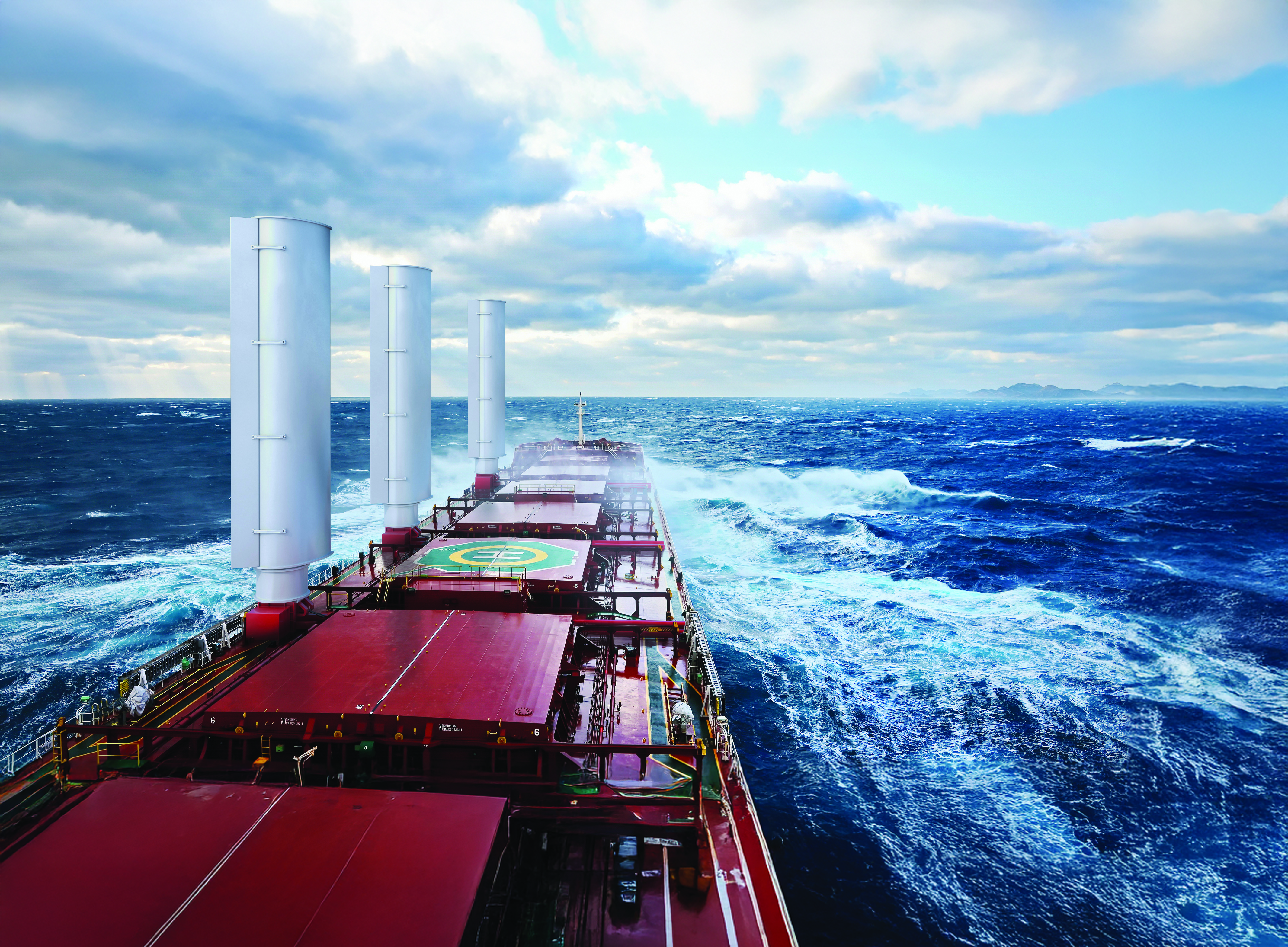 | Maritime stakeholders are all seeking to decarbonize their fleets to comply with international regulations and help the sector meet its net-zero goals. However, ships generally stay in operation for 20-25 years, meaning that decisions today are locked in for many years to come. As a result, many shipowners and operators are hesitant to make large investments in as-yet-unproven alternative fuels and technologies, since their long-term ROI is uncertain. The good news is that a large toolbox of low-carbon technologies is available to install on vessels immediately. Hull designs, propeller attachments, wind propulsion systems, air lubrication systems, batteries, fuel cells and onboard carbon capture systems can help vessels cut emissions today. |
Bureau Veritas provides tailored technical and advisory expertise to help clients find the best low-carbon technologies for their fleets. From the design stage through the operational life of your vessel, we can help you determine how to pragmatically improve efficiency and reduce costs and environmental impact at the same time.
We enable the adoption of low-carbon technologies on ships through a comprehensive classification framework designed to build stakeholder confidence and reduce project risk. We develop Rules, Guidance notes and technical documents that establish the requirements for integrating low-carbon solutions into ship design, structure, materials, equipment and machinery. For unproven technologies, Bureau Veritas provides Technology Qualification Assessment (TQA) to validate concepts and demonstrate feasibility. We further de-risk projects by conducting risk analyses of low-carbon technologies.
Marine sustainability
| While maritime decarbonization is of the utmost importance, the industry’s commitment to sustainable operations must go beyond focusing purely on carbon emissions. We must take a more holistic view to ensure that we are also working to protect biodiversity and address noise, water and air pollution at ports and on the high seas. In addition, shipowners, operators and other stakeholders must consider the full lifecycle of their vessels – from the financing and design stages all the way to end-of-life recycling. |
Bureau Veritas supports our clients in designing sustainable fleets. We provide guidance on green loans and financing, underwater radiated noise, ship decommissioning and more. By tackling sustainability head on, we can shape a better maritime world


