Low-carbon technologies
Sailing towards a zero-carbon future
Around 80% of the world’s goods are transported by ship, meaning that the maritime sector has a critical role to play in decarbonizing the global economy. The shipping industry is exploring viable routes to reduce emissions from the existing fleet. The implementation of low-carbon technologies, such as alternative fuels and innovative ship designs, will be key to achieving a zero-carbon future.
Head of Sustainability Advanced Services
Low-carbon technology is becoming essential in shipping. We have to adapt now to cut emissions and keep the maritime industry moving forward.
The many paths to maritime decarbonization
Decarbonizing the maritime sector is a complex challenge, but low-carbon technologies are making it possible. From wind propulsion and batteries to carbon capture and nuclear power, innovative solutions can help the shipping industry meet the net-zero goals set by the International Maritime Organization (IMO).
Wind propulsion
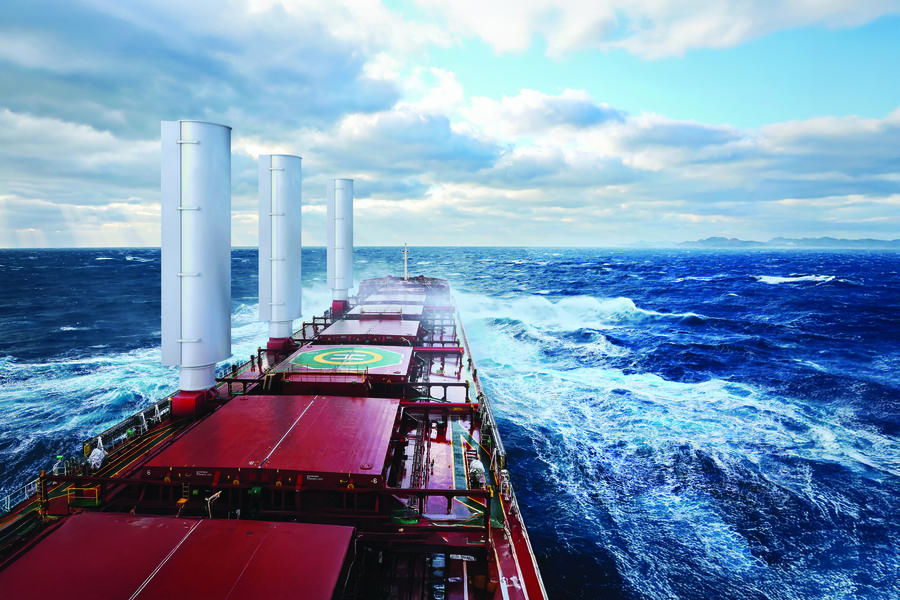
Wind propulsion holds many advantages. By harnessing wind energy to generate propulsive thrust, shipowners can save on fuel costs while meeting their decarbonization goals. The use of wind power also helps reduce engine vibrations that cause underwater radiated noise.
Electrification
To meet decarbonization targets, the maritime industry is scaling the electrification of shipping fleets by implementing lithium-ion (Li-ion) battery and onshore power supply (OPS) systems. Batteries provide a reliable source of power that suits the operational requirements of different vessel types, while OPS systems supply electrical power to ships docked at port.
Energy-saving devices
Energy-saving devices (ESD) are ship technologies designed to reduce fuel consumption and improve propulsion efficiency. ESDs include asymmetric after-bodies, propellers, nozzles, guide fins and rudders.
Onboard carbon capture
Carbon capture and storage (CCS) is a process that extracts CO2 from industrial processes and stores it so it does not enter the atmosphere. This is an alternative route to emission reduction, without relying on low-carbon fuels.
Nuclear
Nuclear power’s zero-emission profile, high energy density and reliability is attracting interest in the maritime industry. As shipowners strive to meet net-zero goals, nuclear propulsion could play a key role in decarbonizing shipping, while also strengthening global energy security.
We support sustainable maritime solutions
Bureau Veritas is at the forefront of the energy transition, working with shipowners, shipyards, equipment providers and manufacturers to develop clean energy solutions for the maritime industry. We help industry players meet safety, technical and regulatory challenges associated with novel propulsion systems, energy saving devices and other low-carbon technologies.
To support this mission, we created the Future Shipping Team: a global, collaborative, diverse and inclusive team that spans our organization. The team brings together subject matter experts to coordinate knowledge sharing, research and development across Bureau Veritas Marine & Offshore and the wider Group. Leveraging our maritime experience and the expertise of a TIC leader active across all industry sectors, we aim to support clients who want to challenge the status quo and make future-proof choices on sustainability, technology and innovation.
Ultra-Low Emission Vessels
Bureau Veritas’ Ultra-Low Emission Vessels (ULEV) notation is designed for ships that go beyond existing MARPOL emission requirements with advanced air-emission control technology. This voluntary notation helps shipowners and operators distinguish their fleets by demonstrating a commitment to environmental protection and performance.


